Games that changed how I think about games
2026-06-15
I like video games. (Outstanding, I know.)
Ever since I first got my hands on my mom’s Nintendo DS and eventually got to try Spore on a Windows XP laptop when I was 8, I fell in love with what the medium was capable of. The first game I truly fell in love with was Minecraft, all the way back in its Beta when I got to play it at a friend’s place. Eventually, I did get my own copy when 1.0 dropped, and I spent countless hours in Creative Mode just trying things. Games are also what introduced me to internet culture and the original YouTube community, but let’s not get too sidetracked. My point here is that I have quite a lot of history with games.
There is, however, one game that I got to play in 2013 that really awakened something in me. The game is actually very underground, despite having gone a bit viral (by 2013 standards) for a few days thanks to YouTubers covering it. This game was Antichamber.
It was quite simple: you explore plain white hallways and use a tool gun to pick up and place cubes in order to solve puzzles. What made the game so unique, however, was how it seemingly bent the rules of space, with hallways that turn a few too many times than they physically should or walls that disappear after being observed for a while. At the time, such spatial trickery had never really been tried before in 3D games, so it made quite the impression online.
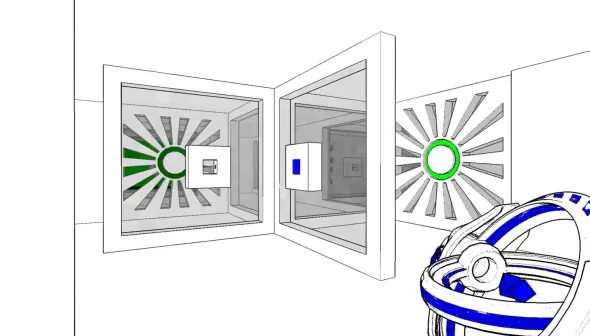
Very few people actually stuck around much further than the introduction, sadly, but curiosity got the better of me. The game eventually starts to make sense as you begin to piece together the rules of its world. The impossible hallways and disappearing walls actually have a logic to them that you can learn and eventually master.
Throughout the game, there are these black panels containing a picture and some text that serve as a sort of life lesson. The game’s way of teaching mechanics through trial and error parallels how we are born knowing nothing and gradually figure things out as we go through life. In the main lobby, you can look back at all the panels you’ve found, and once you have all of them, it becomes clear that the order in which they fit together represents the course of life from birth to death.
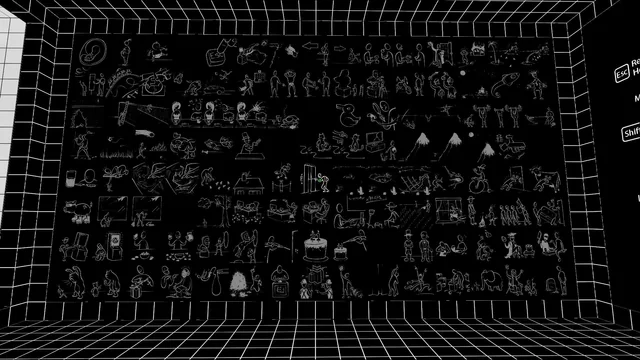
The main thing to take away, I think, is that the game never really puts up any physical barriers that impede progress. The only thing blocking you is knowledge. Once you know how to finish the game, you can do so in just a few minutes. This concept; a game that does not use levels, items, or anything else to gate progression, but instead relies purely on knowledge; is precisely what I am getting at here. As interesting as Antichamber was, this article is not primarily about it. It simply serves as much-needed context for how I became aware of a particular genre of game.
We already know of some similar ideas, namely Metroidvanias (named after the two series that most influenced the genre: Metroid and Castlevania). Metroidvanias use items and abilities as progression barriers. The map contains areas that require special ways of accessing them, and you can only enter them once you’ve found the item or ability you need. A famous example would be Hollow Knight.
But what about a game that does this with just your knowledge? The term I’ve occasionally heard used to refer to games like Antichamber, and the whole concept this article is about, is: Metroidbrainias. (Get it? Metroid-BRAIN-ia. Okay yeah, you get it.)
There is something so enticing to me about a game using nothing but the player’s ignorance as a progression barrier. It leads to these eureka moments where suddenly things click and you realize that you could have always been doing something differently, or perhaps you’ve been misinterpreting something all along. To me, that is what makes these games so satisfying, but it is a double-edged sword. The big downside to this form of game design is that they are only fully playable once. After you figure out their rules, finishing them mostly becomes trivial. Of course, if enough time passes, you may forget some of what you’ve learned and get something resembling a fresh replay, but it will never be quite as impactful as the first time.
This also means that these games are extremely sensitive to spoilers.
In the rest of this article, I’m going to talk about three of my favourite games of all time, all of which are completely ruined if you know almost anything about them. As such, consider this your warning. If you have become interested in the thrill of experiencing a Metroidbrainia, leave this page now and go play them!
The three games I’m going to cover are The Witness, Blue Prince, and Outer Wilds (my favourite video game of all time).
Around 2019, I came across a game called The Witness through an infamous video titled The Best Game That You Shouldn’t Play by game critic Joseph Anderson. The video is highly critical of the game, mainly because of its bizarre development and the drama surrounding its creator, but the premise interested me enough on its own that when Anderson issued the standard “stop the video now and go play it if you don’t want the game spoiled” warning, for once I actually heeded it and decided to give the game a shot. What followed was one of my favourite puzzle experiences.
The Witness is a game that doesn’t hold your hand. The game fundamentally respects you as an intelligent player capable of figuring things out on your own, which is something a lot of games should take note of. The premise is simple: you are alone on a mysterious island, and there are puzzle panels everywhere. Every one of these puzzles shares the same basic premise: get the line from the start to the finish.
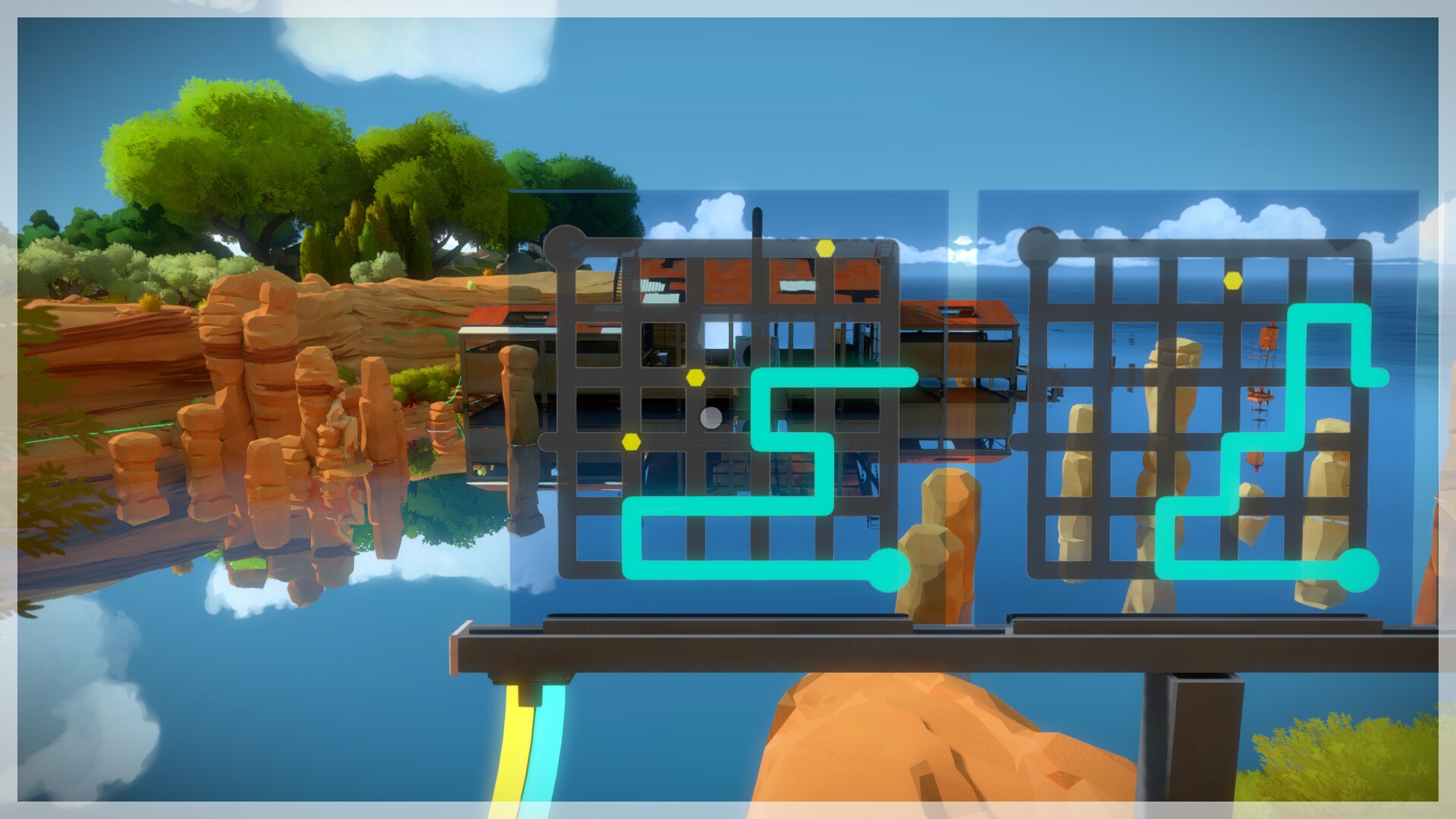
At first, this seems pretty standard. You complete the first area by solving some basic mazes and are then granted access to the entire island to explore freely. Just after leaving the starting area, however, you immediately get hit with the realization that these line puzzles have much, much more to them than they first seemed.
Strange symbols start appearing on the panels you find, all of them new to you. The very first puzzle you encounter after the tutorial area features some of these symbols and serves as a lesson that you will encounter puzzles you simply cannot solve because you do not yet know how. When that happens, the correct thing to do is go explore somewhere else until you learn what you’re missing. As you explore each area of the island, the symbols gradually start to make sense, and you realize that the panels contain an entire logical language.
The symbols combine in complex but sensible ways, and the game never forces you into situations that are much harder than you can reasonably handle. You will find many panels that you cannot solve, but there is always somewhere on the island where the fundamentals of that puzzle type are taught. I absolutely love how The Witness handles progression. Exploration is rewarded with knowledge, and knowledge is rewarded with more puzzles and more exploration.
Near the end of the game, the puzzles start becoming meta-puzzles by interacting with real space and even glitches in the screens themselves. But the real secret of the game runs much deeper.
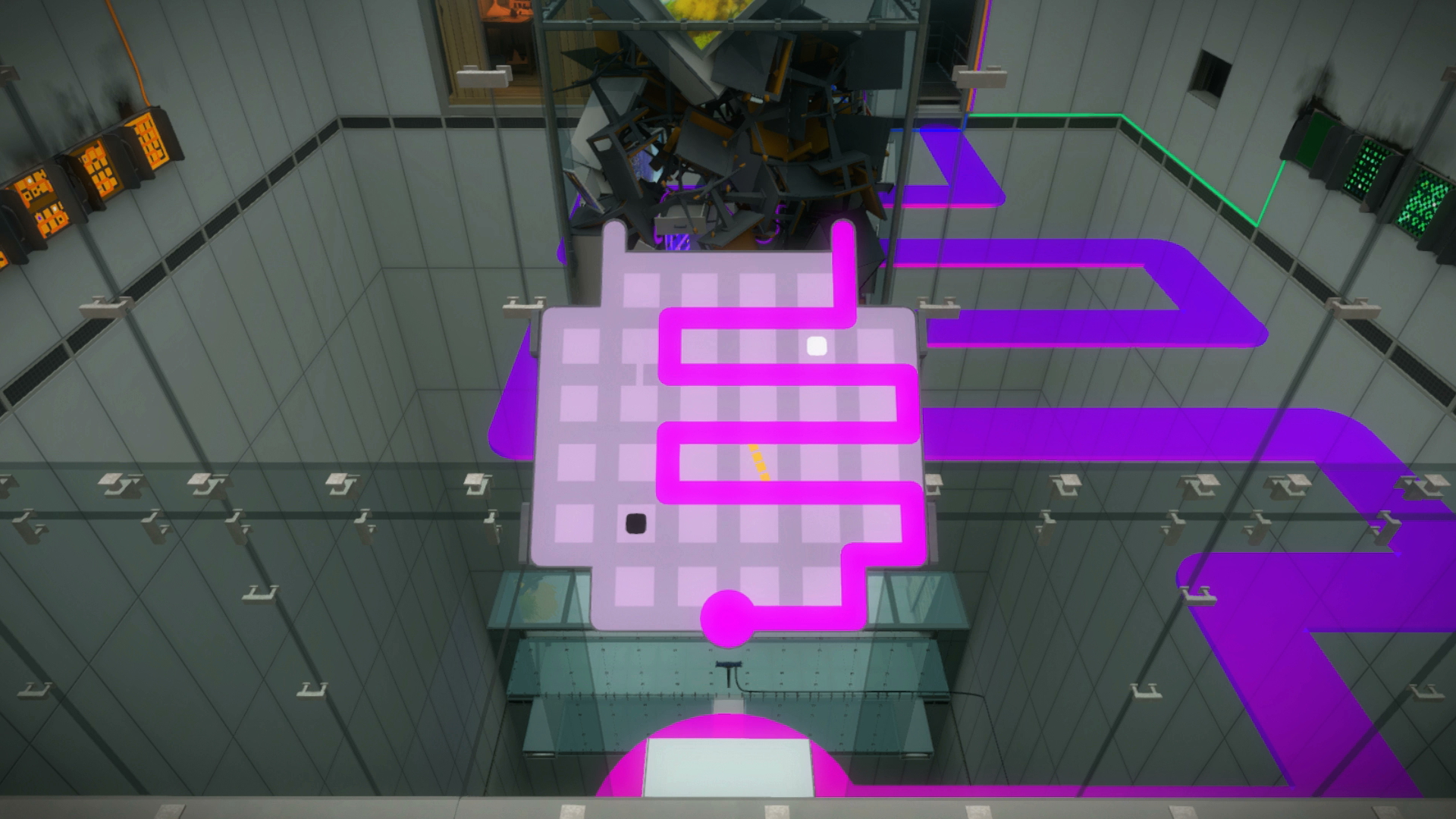
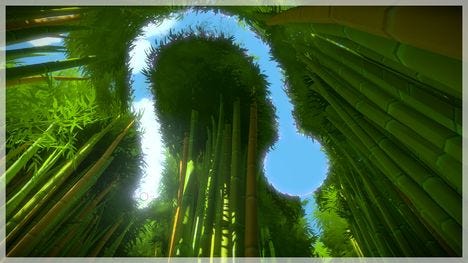
You see, as you complete all these line puzzles, you inevitably begin to see the same pattern everywhere on the island: the circle you click to start a puzzle, a path the line can travel along, and an endpoint. You start seeing it in the vines on trees, in the sand, in the walls of buildings. Even in the sky itself.
Eventually, curiosity gets the better of you, and you decide to see what happens if you click one of these hallucinations of yours… And that is where the game goes from “this is pretty fun” to “holy shit”.
The whole time, throughout the dozens of hours you’ve been playing, you could have clicked on these. In fact, the game has been keeping track of your progress solving these “environmental puzzles” all along. There are hundreds of them.
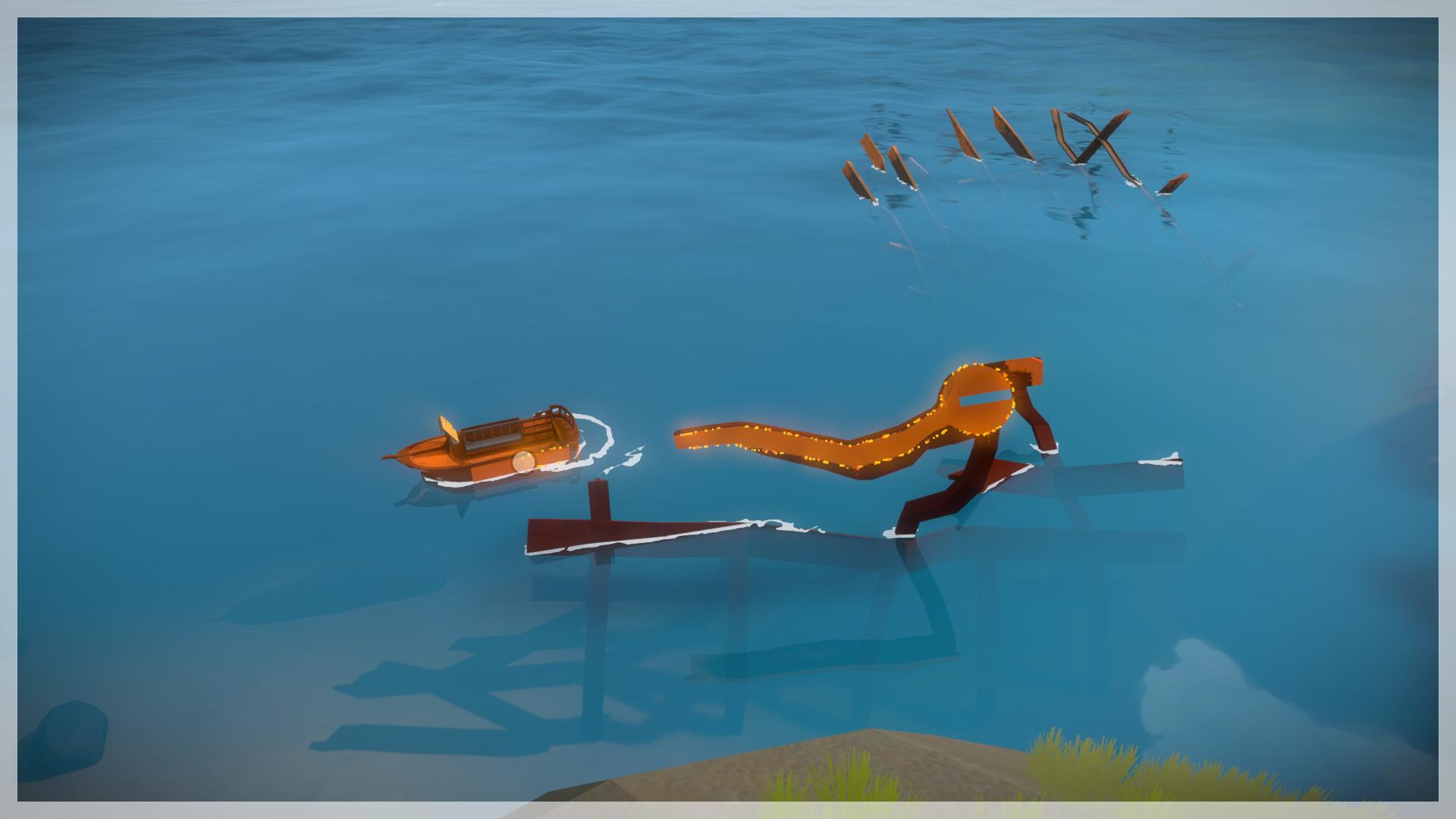
Some are so absurdly well hidden that they require standing at a precise angle, at a precise time of day, waiting for clouds to align just right in the sky. Others involve activating a boat on one side of the island, running across to the other, and using the side of the moving boat combined with a piece of wreckage to create the start of a puzzle. You then have to follow the boat with your mouse until it lines up with another piece of wreckage that serves as the endpoint.
I had never actually 100% completed a game before The Witness, but the joy of exploring and learning its mechanics drove me to complete every single panel, environmental puzzle, collectible, challenge, and secret in the game. The reward? Absolutely nothing except the fun you had along the way.
The game certainly has its flaws. Some of the puzzles are ridiculous even when you fully understand them. Some of the messages hidden in the collectible films and audio logs veer into outright pseudoscientific nonsense. And the game’s creator is known for being rather pretentious, which does occasionally show through in the game itself. But to me, these are very minor flaws in an otherwise excellent Metroidbrainia.
The next game I’d like to tell you about is much more recent. In fact, it came out just last year in early 2025.
It is a game that I have not yet finished, simply because it is so large and its secrets run so deep that I’m currently taking a break before continuing my attempt to 100% it.
The game was nominated for Best Indie Game of 2025, and were it not for its extremely strong competition (Hollow Knight: Silksong and Clair Obscur: Expedition 33), I am certain it would have taken the prize. I am, of course, talking about Blue Prince.
I discovered this game because I watched Markiplier play it. (Still sad that he only gave it one video.) I immediately wish-listed it. However, I didn’t actually play it right away. Instead, I bought it as a birthday gift for a friend who also loves puzzle games. Shortly after “finishing” it (we’ll get to those quotation marks), she told me that it was an absolute must-play, so I finally decided to try it myself.
Let me tell you, I was not disappointed. This game struck exactly the same chord that The Witness had a few years earlier. Blue Prince has one of the most unique core mechanics of any puzzle game I’ve ever seen.
You begin with an empty floor plan for a mansion and gradually draft rooms in order to progress toward the opposite end. Each door in a room presents you with a choice of three room blueprints, almost like drawing cards from a deck. The game is also a roguelite, since it resets most of your progress after each attempt, aside from a handful of permanent upgrades. By far, however, your most powerful permanent upgrade is your knowledge of the game.
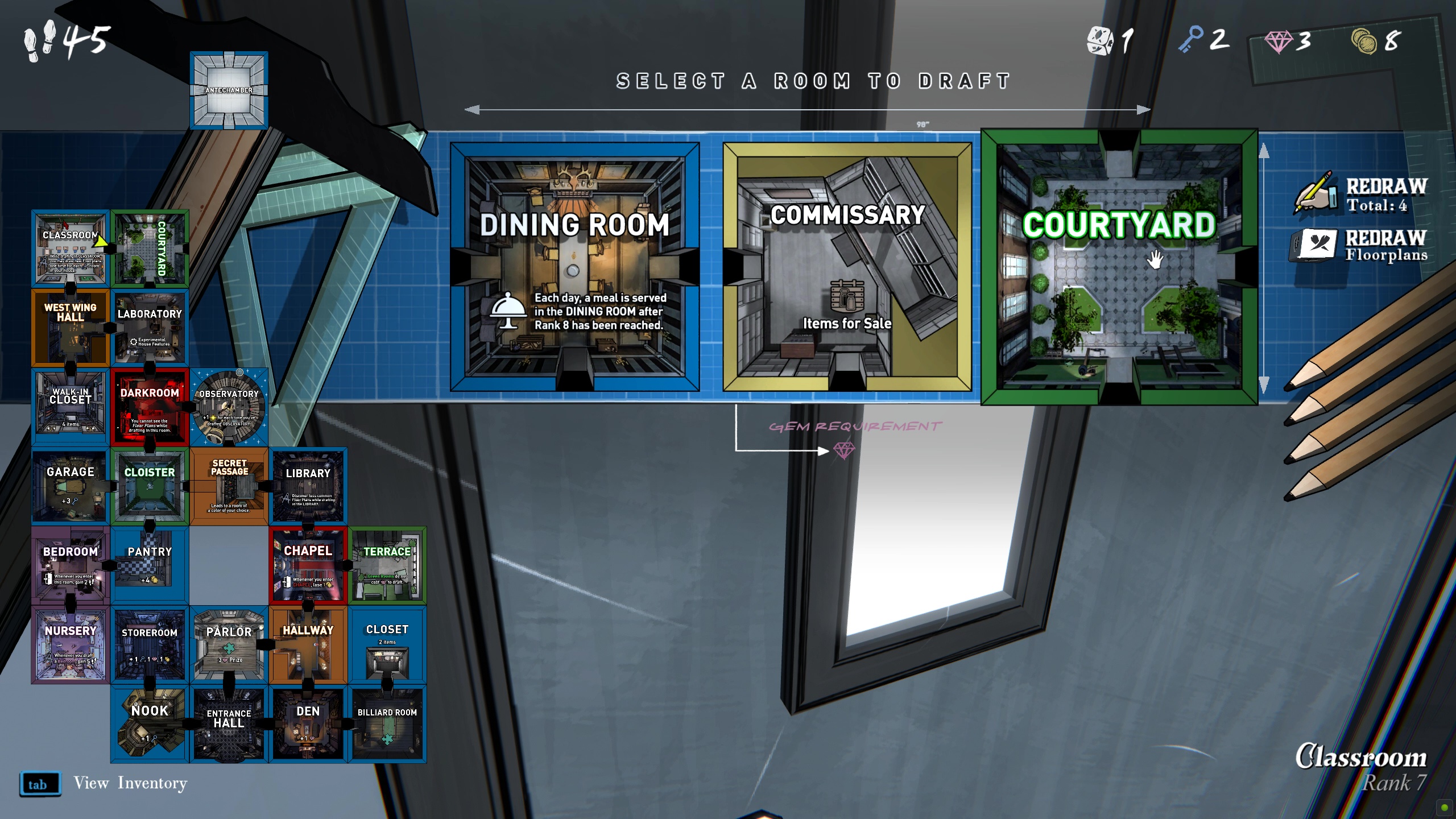
Everything revolves around spatial thinking and learning how the mechanics of each room interact with one another. In this case, RNG does play a fairly significant role, and that is indeed the most common criticism of the game. I admit it can occasionally get on your nerves. That said, I actually find that most of the times I end up getting blocked during a run, it was ultimately preventable had I planned my route better.
The game initially presents you with a simple objective: reach Room 46, located at the far end of the mansion. This challenge quickly turns out to be much harder than it first appears.
Eventually, you manage to reach the room immediately before it; the Antechamber. (Coincidence? Yes, actually. Or…?) There, it is revealed that you cannot even enter the room unless you have somehow unlocked at least one of its entrances during that run.
Eventually, you discover that this is accomplished by flipping hidden levers located in certain rooms throughout the mansion, each one opening a different side of the Antechamber. So, after many attempts, you finally manage to open one of its entrances and connect your route to it. And once again, you are met with another obstacle.
The final door leading north into Room 46 remains locked. To open it, you must activate yet another secret lever somewhere else. The game strongly suggests that this lever is probably located in the basement, especially because the Antechamber also contains a large key labeled for the Basement. The strategy, then, becomes finding the Coat Check; a room that allows you to permanently store an item between runs; and using it to save the Basement Key for later, once you’ve figured out how to actually reach the basement in the first place.
As it turns out, this game has much more going on than it initially lets on. And we have not even scratched the surface.
I know I already gave a spoiler warning earlier, but I’m going to do it again. Now that you’ve had the opening mystery of the game spoiled, if any of this sounds appealing to you, stop reading and go play it. Seriously. You will thank yourself later.
For everyone else, here we go.
It turns out that the basement can be accessed in a surprising number of ways, meaning different players will often discover entirely different routes into it.
Personally, my first entrance came from solving the Pump Room puzzle in such a way that I drained the fountain outside the mansion. By descending the staircase hidden beneath the water, you can reach one of the basement entrances and unlock it using the Basement Key.
You can also access it by crafting a special item in the Workshop that allows you to break wooden planks covering an old mine shaft. Alternatively, you can draft the rare Foundation room; which becomes permanently available after first discovering it; and learn how to activate its elevator. I won’t be telling you how to do that one. 😉
This is probably the most common route into the basement. Once you’re down there, you discover that the entire basement level is effectively a giant puzzle gauntlet filled with its own interconnected secrets. I cannot adequately describe the feeling of slowly uncovering just how deep this game goes when you originally assumed it was just a puzzle about fitting rooms together inside a house.
Once you figure out how to navigate the basement, you eventually get your winning run. Everything falls into place. You draft your way to the Antechamber, unlock its entrances, descend into the basement, navigate its maze of puzzles, flip the final lever, and make it back upstairs with just enough steps remaining to return to the Antechamber and finally enter Room 46.
You have reached the objective the game gave you from the very beginning. The credits roll. And then you start realizing that almost none of your questions have actually been answered. Down in the basement where the final lever was located, there were eight other sealed doors.
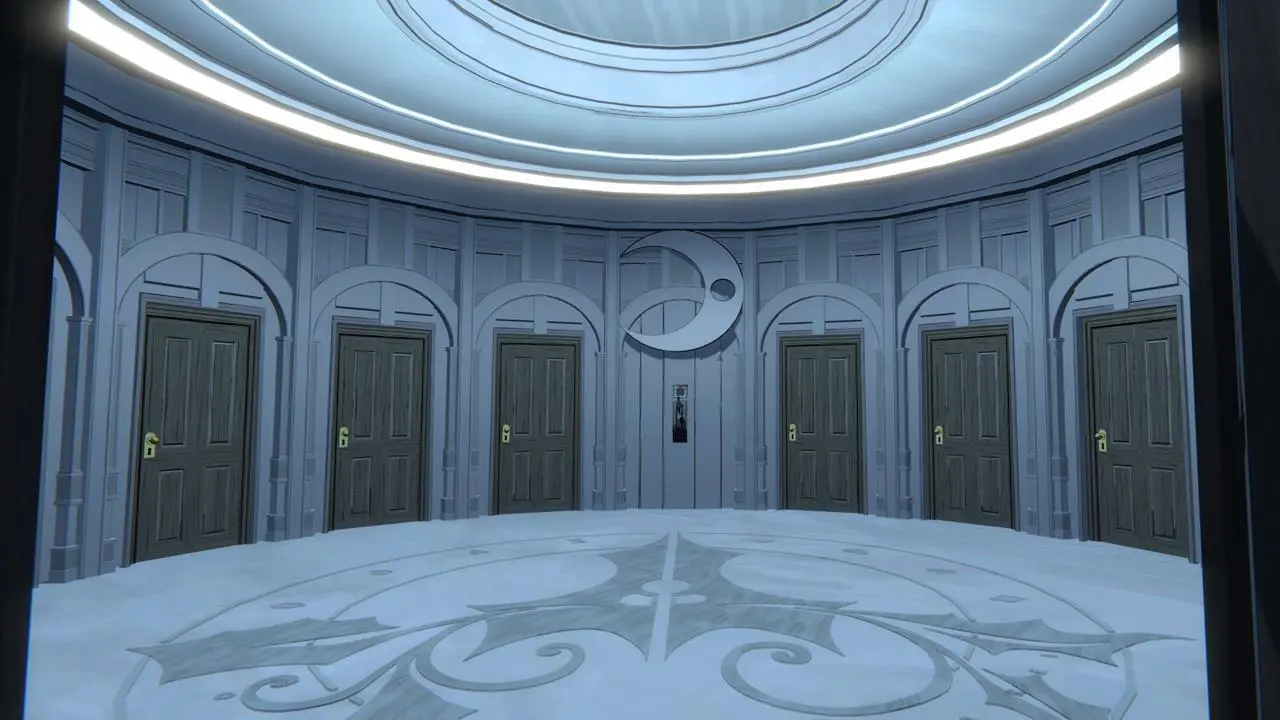
When the game restarts, you are suddenly introduced to a trophy system that tracks your progress beyond the ending. Except calling it “post-game content” would be misleading. What you just completed was essentially the tutorial. And now there are another hundred hours of mysteries waiting for you. Mysteries so deep that, even now, more than a year after release, the developers have confirmed that the community still hasn’t uncovered everything.
I cannot possibly cover every secret in this article or it would turn into a novel, but here is one of the major puzzles beyond the main objective.
In almost every room, you can find strange drawings depicting objects, animals, and various other things. Most players realize fairly early that these images must mean something, but it takes quite a while before enough clues emerge to understand what is actually happening.
Eventually, you discover that the two paintings found in each room can be interpreted as two words that are spelled the same except for a single differing letter. It also turns out that the paintings are not tied to the room itself, but rather to a specific position on the mansion grid.
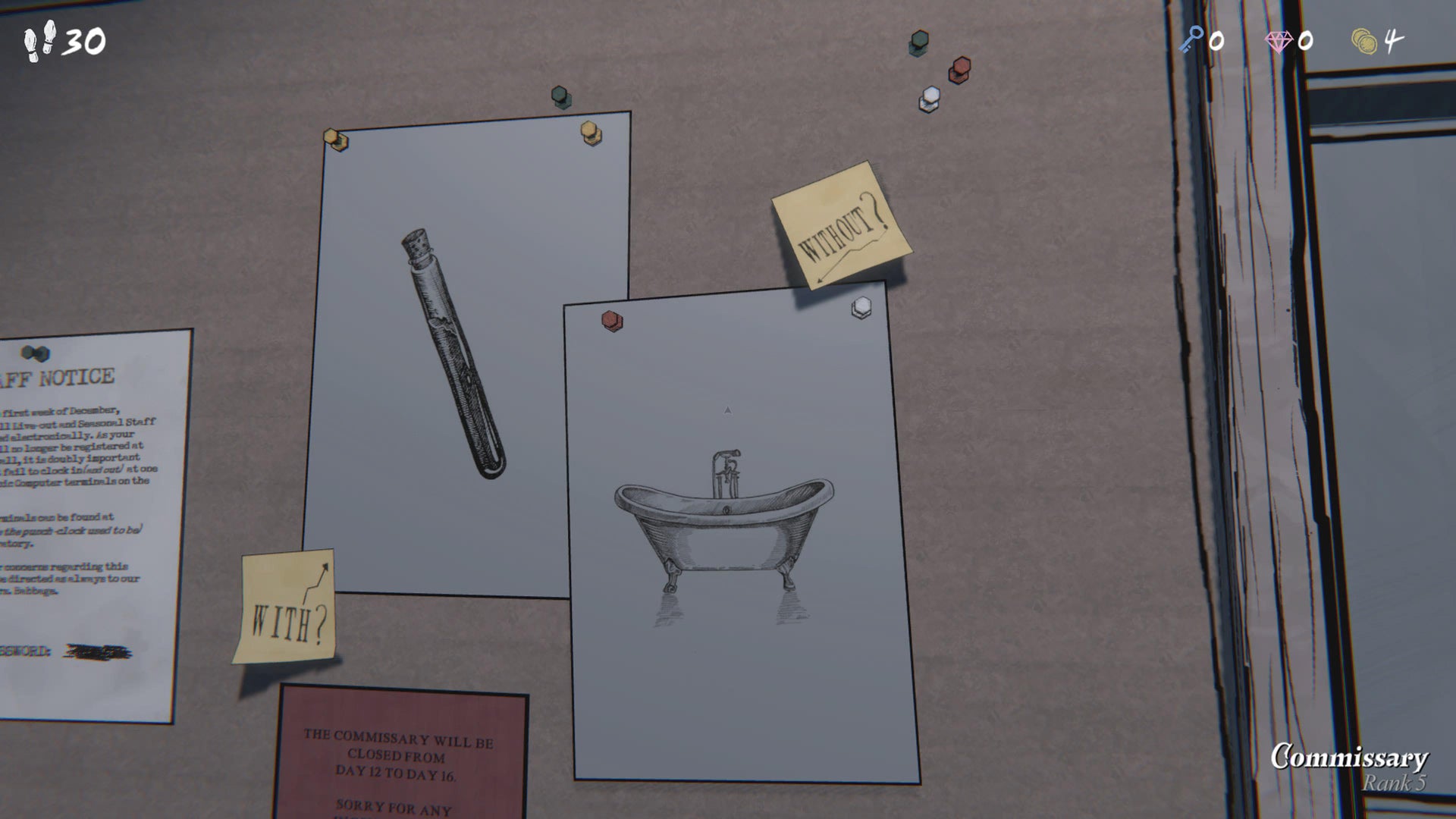
If you record all of these letters, you end up with the following message:
IF WE
COUNT
SMALL
GATES
EIGHT
DATES
CRACK
EIGHT
SAFES
This becomes an enormously important clue because, as the message suggests, it helps you crack the many safes hidden throughout the estate.
I’ll give one example: In the Drawing Room; which is heavily implied to be where all these paintings were created; you can discover a hidden safe by noticing that a portrait of your great-uncle Herbert depicts a candle holder with one bent arm. The exact same candle holder exists in the room. If you interact with it, you can bend the matching arm like a lever, causing a hidden safe to be revealed inside a wall. Now, how does the clue help?
It turns out that the paintings throughout the room depict people taking steps of different sizes, indicated by arrows drawn near their feet. The word “gaits”; which sounds identical to “gates”; is also a synonym for the word “steps”.
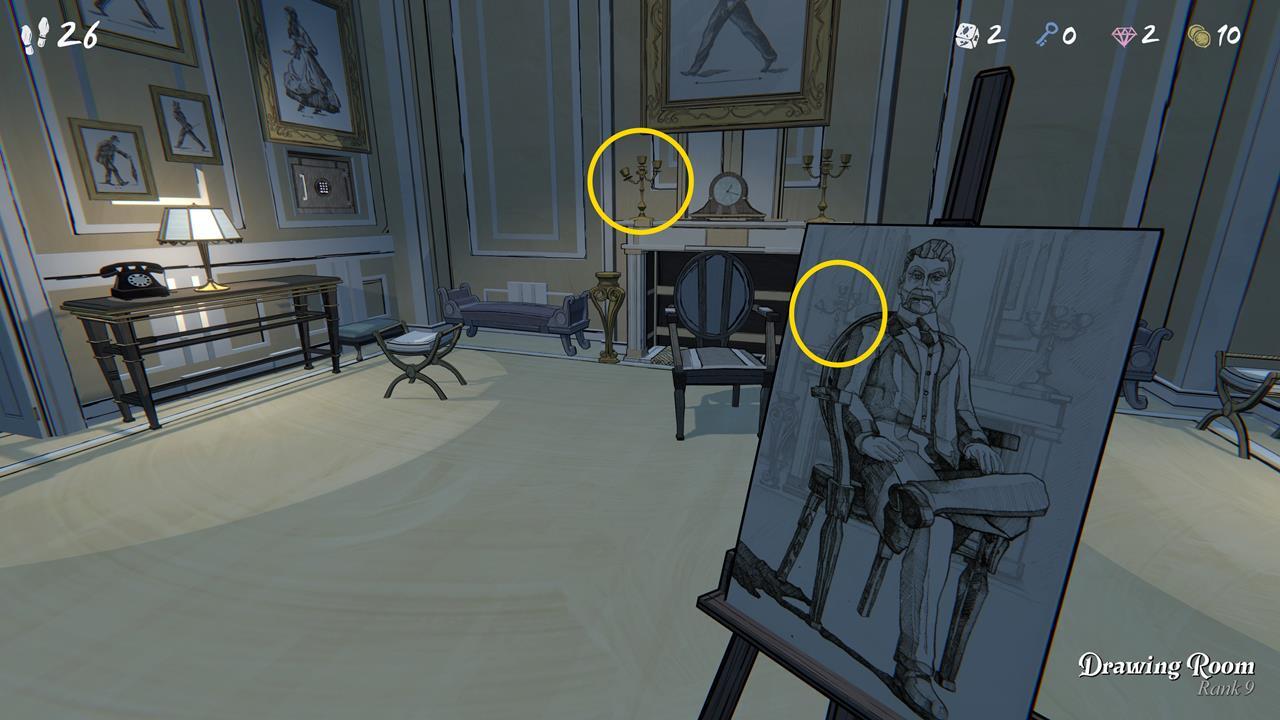
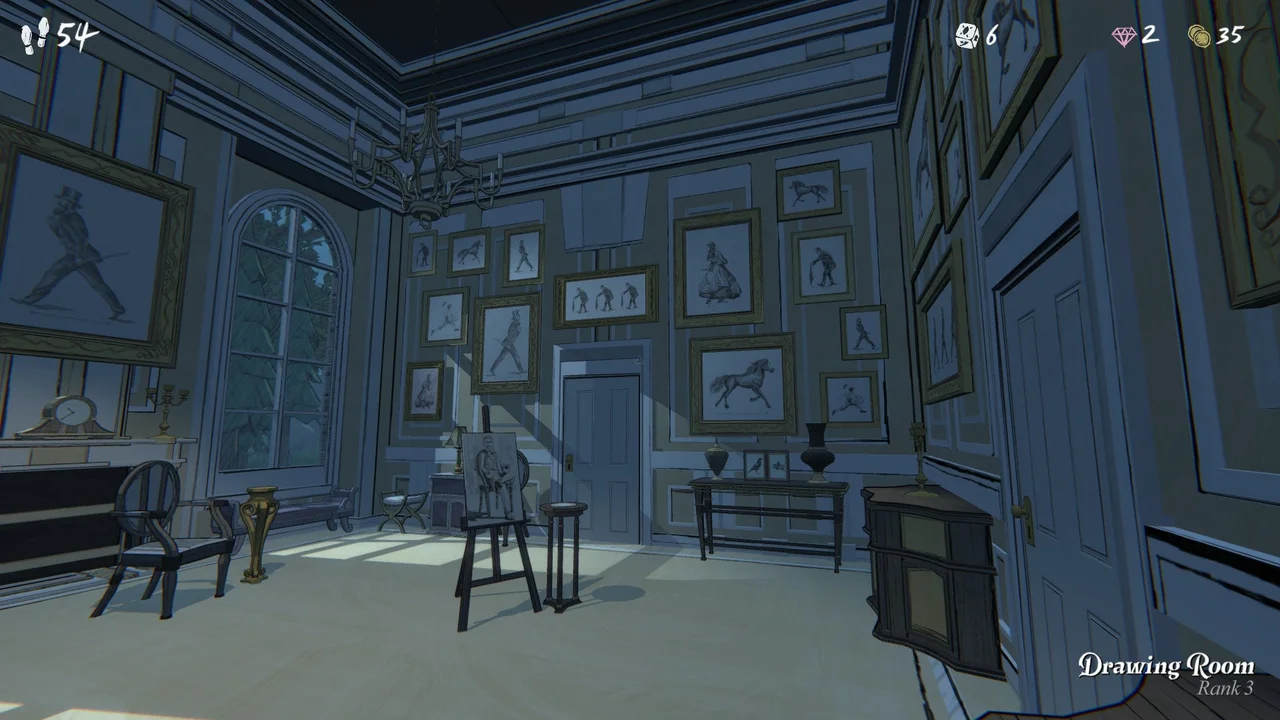
If we revisit the clue, If we count small gates, eight dates crack eight safes, we can infer that we need to count the smallest gaits shown in the paintings. There are fifteen of the smallest gait and four of the next-smallest. Since the clue specifies that safe codes are dates, 15/04 becomes the logical solution.
Yeah… And that’s just one puzzle.
The eight doors down in the basement, known as the Sanctum Doors, are another incredibly deep rabbit hole. Unlocking them requires hunting down keys hidden throughout the estate and piecing together the intricate lore of the game’s world, from its politics to its geography. There are also puzzles that unlock entirely new rooms, which in turn unlock entirely new mechanics, and it just keeps going.I have not even covered 10% of this game.
Blue Prince is a love letter to puzzle games and mysteries. It is a game that absolutely blew my mind and continues to do so as new secrets are uncovered by people far, far smarter than me in the community. And when I say that, I mean it. Some of the deepest puzzles require genuinely non-trivial knowledge of cryptography to solve.
With that, there is one final game that I would like to cover. Except I lied. This game is so important to me and left such a lasting impression that I’m not actually going to talk about it in detail. Not yet, at least.
I’m not going to spoil it because I strongly believe that anyone who loves video games as a medium should play this game completely blind at some point. I know some of you are rolling your eyes at that statement. I know it has been said countless times before. Trust me, I reacted exactly the same way. The game was gifted to me by a friend back in 2023, and I neglected it despite being told by practically everyone who had played it that it was going to change my life. Finally, around the fall of last year, I decided to give it a chance without knowing anything about it. I hate sounding like a generic robot, but it’s true. The game changed my life. I am talking about Outer Wilds.
Released in 2019, it was nominated in three categories at The Game Awards, including Best Independent Game. It won none of them. Outer Wilds is a game that has somehow managed to avoid a great deal of mainstream attention, and as tragic as that may be, I actually think it’s probably for the best. It means getting spoiled is surprisingly difficult unless you actively seek spoilers out.
Despite never becoming a massive mainstream hit, Outer Wilds is universally praised by nearly everyone who has played it or studied game design. It is a groundbreaking masterpiece that plunges the player into a mystery so carefully crafted and elegantly written that it fundamentally changes how you think about games. Outer Wilds is proof that games are art.
It is, in my opinion, the gold standard of the Metroidbrainia genre. You rely on absolutely nothing except the knowledge you gather as you play, slowly coming to understand a world that initially appears chaotic and incomprehensible. It is no exaggeration to say that if you know exactly how to beat the game, you can finish it in around seven minutes. I have over fifty hours played. That alone should tell you something.
It is a testament to the fact that games do not need to hold the player’s hand. They can instead be designed so elegantly that the player’s own curiosity naturally guides them toward the answers.
Here is all I will say: You are an alien living in a strange solar system and are about to begin your career as an astronaut. The game features a real-time physics simulation of an entire solar system that you can freely explore using your ship. Scattered throughout this system are the remnants of an ancient civilization that was attempting to achieve something extraordinary before mysteriously vanishing. Then something happens shortly after the tutorial that completely blindsides you. From that point onward, it is up to you to explore, investigate, and gradually piece together what is happening, why it is happening, and what became of those ancient aliens.
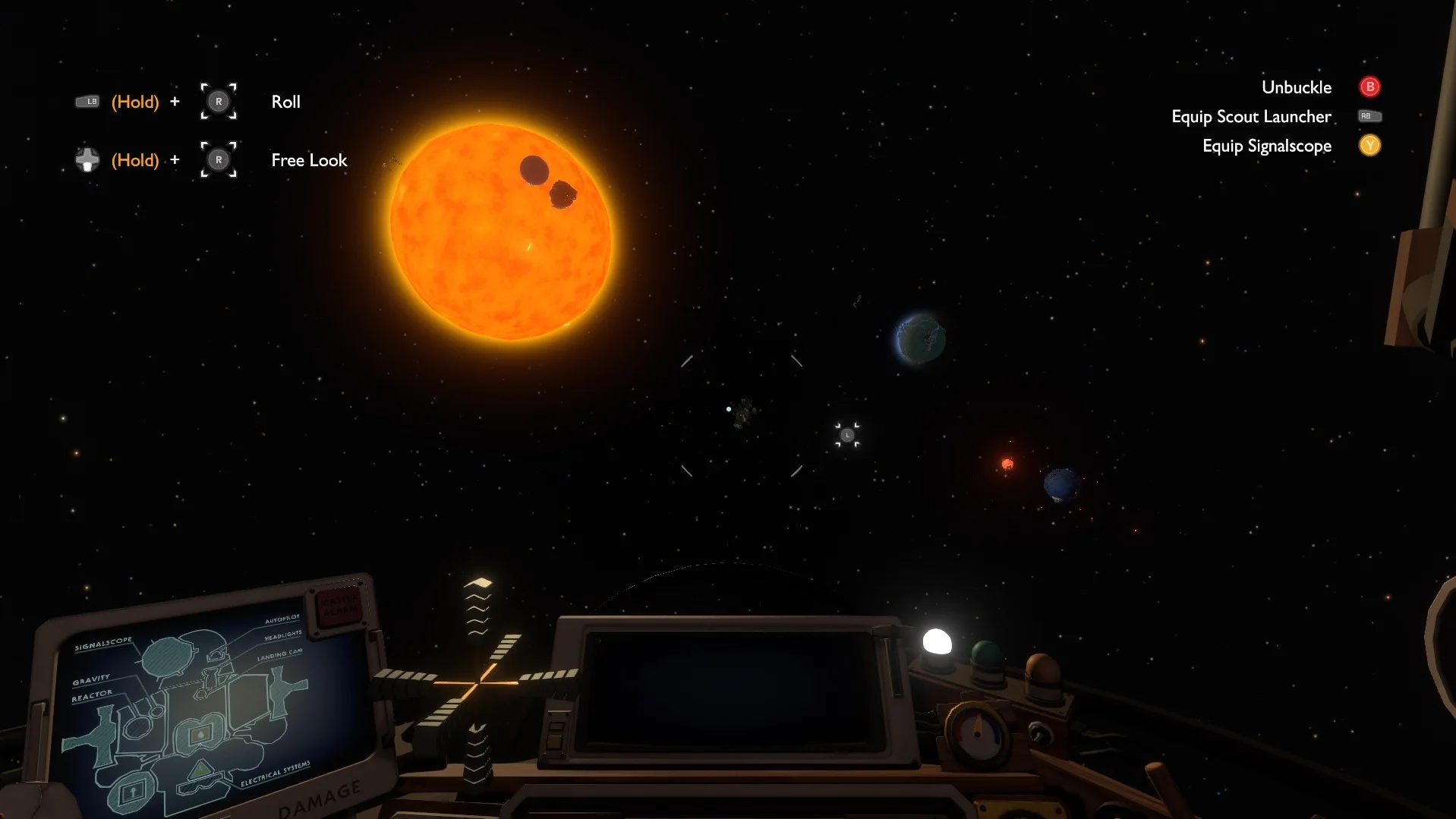
The game is masterfully written. You will become attached to its characters, especially those whose lives, hopes, fears, and motivations are preserved in the records they left behind. It is an intensely emotional and existential game that wrestles with ideas of finality, acceptance and what we leave behind. And yes, I absolutely cried my eyes out at the ending. If you know, you know.
I hope that is enough to convince you to play it if you haven’t already. For those who don’t play games or simply don’t have the ability to experience it themselves, don’t worry. I will talk about it in detail in a future article. It deserves one entirely to itself.
So there you go: Metroidbrainias. A genre that most people have never even heard of, yet have probably brushed up against at some point. I love them. And I think more people should.
Footnote:
Other great Metroidbrainias include Animal Well, Return of the Obra Dinn and Tunic